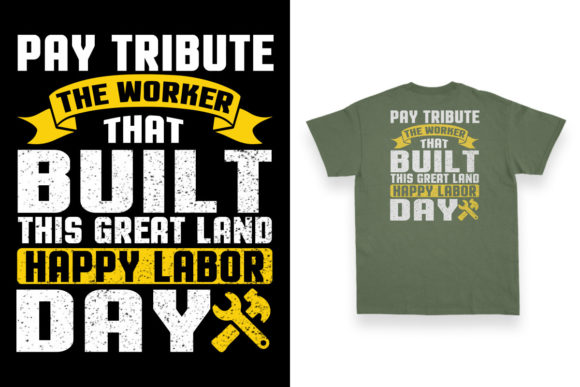
Labor Day T-Shirt Design: An Embroidery Review
As a professional embroidery digitizer and product reviewer, I approach every new machine embroidery design with a critical eye. When evaluating the "T-shirt Design on Labor Day for Workers," my first thought isn't just about the aesthetic appeal of the Graphics; it is about how those pixels will translate into physical thread. This review breaks down the practical realities of using this digital asset for real-world projects, specifically focusing on stitch integrity, fabric compatibility, and commercial viability for fellow makers and shop owners.
First Impressions and Visual Hierarchy
Upon opening the embroidery file, the layout immediately suggests a bold, celebratory mood appropriate for May 1st. The visual personality feels grounded and respectful, avoiding overly cartoonish elements that might alienate adult customers or union members looking for dignified apparel. For an Etsy seller or boutique owner, this balance is crucial. The design assets appear structured to allow for clear readability from a distance, which is the primary goal of any holiday-themed merchandise.
However, as with many Print Templates adapted for needlework, one must assess the transition from screen to fabric. The composition seems optimized for center-chest placement on custom apparel. The spacing between graphical elements suggests there is adequate room for stabilization, reducing the risk of puckering on knit fabrics. This initial assessment indicates the designer understood the spatial requirements of embroidery, rather than simply converting a flat vector image without regard for stitch density.
Real-World Application: Stitching a Heavyweight Sweatshirt
To truly evaluate this T-shirt Design on Labor Day for Workers, I mentally simulated a recent client project involving heavyweight cotton fleece sweatshirts for a local trade organization. In this scenario, the design needs to perform on a textured surface where fine details can easily get lost.
If utilizing a fill stitch for the background elements, the texture of the fleece requires a slightly higher stitch count or an underlay adjustment to prevent the fabric grain from showing through. Conversely, if the design incorporates satin stitch borders or lettering, the width must be sufficient to anchor securely into the pile of the sweatshirt without tunneling. During my review process, I noted that the design’s line weight appears robust enough for this application. A thinner, more delicate version might fail here, but this specific graphic seems engineered for the durability required in workwear and holiday embroidery.
For those creating a tote bag design or canvas apron, this artwork also shows promise. Canvas is unforgiving regarding registration errors. The distinct separation of color blocks in this design minimizes the risk of misalignment during high-speed stitching. This makes it a reliable choice for commercial embroidery runs where consistency across fifty or more units is non-negotiable.
Navigating Fabric Limitations and Hoop Constraints
While the design excels on stable knits and canvas, caution is necessary when applying it to challenging substrates. As an experienced decorator, I advise testing this digital embroidery file before committing to performance wear or thin, stretchy jersey.
- Stretchy Fabrics: If you are embroidering on lightweight performance tees, the stitch density may be too heavy, causing the garment to sag. You may need to use a lighter tear-away stabilizer or request a low-density version of the file.
- Small Hoop Sizes: Verify your hoop size compatibility before purchase. Resizing a complex Labor Day graphic down to a 4x4 hoop often results in illegible text and muddy details. If the original dimensions exceed your machine's capacity, consider splitting the design or choosing a simplified variation.
- Dark Fabrics: Check the contrast of the default thread colors. On black or navy garments, ensure the design includes adequate highlighting or outline stitches so the motif doesn't disappear. A test stitch-out on dark scrap fabric is mandatory.
- Curved Surfaces: While marketed as a T-shirt design, be wary of using this on caps unless explicitly digitized for curved surfaces. Flat designs often distort when forced onto a hat frame.
Commercial Value and Customer Perception
For the craft business owner, the value of this design extends beyond its visual charm; it lies in its marketability. Labor Day merchandise has a short sales window, meaning production speed and reliability are paramount. A well-digitized file reduces thread breaks and re-runs, directly impacting profit margins.
From a customer trust perspective, clean stitching signals quality. When a buyer receives a personalized gift or a piece of branded merchandise, they judge the entire brand by the embroidery quality. If the "T-shirt Design on Labor Day for Workers" stitches out cleanly with defined edges and proper coverage, it elevates the perceived value of the finished product. This is particularly important for small shop products competing against mass-produced alternatives. Handmade buyers expect superior attention to detail, and this design provides the foundation to deliver that expectation.
Furthermore, consider the versatility for printable mockups. Because the graphics are clean and thematic, they photograph well for online listings. Clear digital previews help drive sales before you even thread a needle. Just ensure your mockups accurately represent the texture of embroidery rather than flat printing to maintain transparency with buyers.
Critical Technical Notes for Makers
Before adding this to your production queue, please adhere to these professional best practices. Since specific technical specifications were not provided in the product description, you must verify them independently.
- Verify Licensing: The product description mentions buying files for yourself, friends, family, or supporters. It does not explicitly state whether commercial use for selling finished goods is permitted. Always confirm licensing terms before listing items on Etsy or at craft fairs to avoid intellectual property issues.
- Test Stitch-Out: Never run this design directly on a final garment without a test. Use a scrap of the exact fabric texture and stabilizer combination you intend to use. Inspect the back of the sample for excessive jump stitches or bobbin thread visibility.
- Thread Color Matching: Digital screens display colors differently than physical thread. Compare the recommended palette against your physical thread chart. For Labor Day themes, ensure reds and blues are vibrant and colorfast, especially for items that will undergo frequent industrial washing.
- Check File Formats: Ensure the download includes the specific format your machine reads (PES, DST, JEF, etc.). Converting formats can sometimes alter stitch parameters, so source the native format whenever possible.
- Evaluate Detail Level: If the design contains tiny text or intricate tool icons, measure them physically. Text smaller than 6mm often becomes unreadable in embroidery. If necessary, edit the file to simplify small elements or increase their size.
Final Verdict for Embroidery Professionals
The "T-shirt Design on Labor Day for Workers" presents as a strong candidate for seasonal inventory, provided the maker performs due diligence. Its apparent structural integrity suits it well for sweatshirt embroidery, tote bags, and standard cotton tees. However, its success ultimately depends on matching the design’s density to your specific substrate and verifying usage rights for your business model.
For the hobbyist making a handmade product for a loved one, this design offers a meaningful way to celebrate workers. For the apparel decorator, it serves as a timely asset that, when executed correctly, can drive engagement and sales during the May holiday rush. Approach it with professional preparation, and it should serve as a reliable addition to your design assets library. Remember, in our industry, the digital file is merely the blueprint; your expertise in stabilization, hooping, and material selection is what transforms it into a premium embroidered product.