California Santa Monica Beach T-shirt Design Review
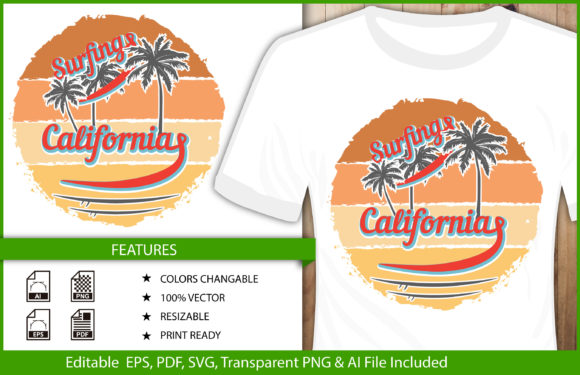
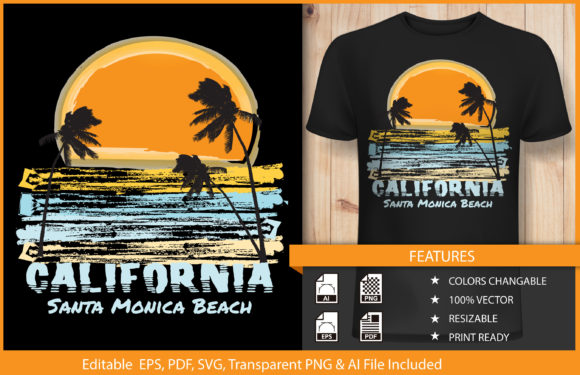
When I first opened the California Santa Monica Beach T-shirt vector file, my immediate reaction was one of nostalgic warmth. As a designer who has digitized and stitched countless coastal themes, I look for more than just pretty colors; I look for structural integrity that translates from screen to fabric. This design captures a specific vintage Americana mood that is currently dominating the T-Shirt Designs market. The layout feels balanced, with typography that suggests movement without being chaotic. However, as someone who regularly prepares files for both print-on-demand and needle-and-thread applications, I had to evaluate this strictly through an embroidery lens. A graphic that looks stunning on a monitor can quickly become a puckered mess on a sweatshirt if the stitch paths aren't considered. Here is my practical assessment of using this artwork for real-world stitching projects.
Translating Vector Graphics to Stitched Reality
The primary challenge with any colorful vector illustration intended for apparel is density management. This California Santa Monica Beach T-shirt design features vibrant gradients and clean lines typical of modern digital art. For embroidery, we must mentally convert those smooth vectors into tangible thread textures. The bold lettering in this composition is excellent news for digitizers. It provides ample space for satin stitch columns or textured fill stitch areas without risking illegibility. When I visualize this on a garment, I see the potential for a high-quality applique design approach rather than a full-coverage dense stitch-out.
If you are planning to use this as a standard machine embroidery design, pay close attention to the color transitions. Vectors often use blending modes that embroidery machines cannot replicate. You will need to separate these elements into distinct thread colors. The tropical palette here is forgiving because it relies on high contrast, which helps maintain visual clarity even when simplified for stitching. This makes it a strong candidate for commercial embroidery where production speed and thread changes directly impact profit margins.
Real-World Application: The Custom Tote Bag Test
To truly judge the viability of this asset, I mentally walked through a recent client request for custom beach tote bags. Canvas totes are notoriously difficult because the fabric texture is coarse and unforgiving. Fine details disappear, and heavy designs cause the bag to sag. I evaluated the California Santa Monica Beach T-shirt graphic specifically for this scenario.
In this context, the design’s hierarchy works beautifully. The main "Santa Monica" text serves as a perfect anchor for a large center placement. For a tote bag design, I would recommend converting the background graphical elements into running stitch outlines or removing them entirely to reduce bulk. The focal point remains legible from a distance, which is crucial for retail merchandise at a craft fair or boutique. If I were producing this as a handmade product, I would pair the bold text with a piece of printed cotton fabric using applique techniques. This hybrid approach preserves the colorful, tropical aesthetic of the original vector while ensuring the finished product remains lightweight and durable enough for daily beach use.
Navigating Fabric Limitations and Hoop Constraints
Not every substrate is friendly to detailed coastal graphics. While this design shines on stable woven fabrics, you must exercise caution when applying it to stretchy knits or performance wear. The California Santa Monica Beach T-shirt artwork likely contains horizontal elements that can distort on jersey knit if the stitch density is too high or the stabilization is inadequate. For sweatshirt embroidery or baby items, always test on scrap fabric first. The weight of the thread combined with the stabilizer can sometimes create a "bulletproof" patch effect that is uncomfortable against skin.
Consider your hoop size limitations before committing to a project. This design appears optimized for adult apparel, but scaling it down for baby embroidery or cap fronts requires significant editing. Tiny serifs or intricate wave details present in the vector may turn into thread nests when reduced below three inches. Conversely, enlarging it for a back-of-jacket print might expose gaps in the fill patterns if the original digitizing wasn't set up for expansion. Always verify that the embroidery file you purchase or create includes appropriate underlay for the specific fabric weight you intend to use.
Critical Pre-Stitch Checklist for Makers
Before loading this design into your machine or listing it in your shop, run through these practical verification steps to protect your reputation and materials:
- Verify Licensing: Confirm whether the digital embroidery file allows for commercial sale of physical goods versus digital redistribution. Terms vary significantly between designers.
- Contrast Testing: View the design in black and white mode within your software. If the image loses definition without color, the stitching will lack depth on dark fabrics.
- Stabilizer Selection: Match your backing to the fabric. Use cut-away for stretchy knits and tear-away for stable canvas when stitching this custom apparel design.
- Mockup Validation: Create a printable mockup on both light and dark backgrounds to ensure the tropical colors pop as intended before cutting actual fabric.
- Detail Audit: Zoom in to 400% to check for overlapping stitches or unnecessary jumps that could mar the surface of a personalized gift.
Enhancing Product Value and Buyer Trust
For Etsy sellers and small business owners, the presentation of this design matters as much as the execution. Customers associate crisp, well-registered embroidery with professional quality. Because the California Santa Monica Beach T-shirt evokes a specific travel memory, it carries inherent emotional value. Leveraging this requires thoughtful product photography and description. When listing a small shop product featuring this art, highlight the tactile nature of the stitching. Explain how the thread sheen mimics the sunlight on water, adding a dimension that flat printing cannot achieve.
This design also offers versatility for design assets bundling. Creative entrepreneurs can use the vector elements to create matching branding for packaging, thank-you cards, or social media posts, creating a cohesive unboxing experience. However, transparency builds trust. If you modify the original Graphics to suit embroidery, state clearly in your listing that it is an embroidered interpretation. This manages customer expectations regarding color matching and detail level compared to the digital preview.
Final Thoughts for the Embroidery Professional
The California Santa Monica Beach T-shirt vector is a robust starting point for makers willing to bridge the gap between digital art and textile craft. Its strength lies in its clear silhouette and nostalgic appeal, making it suitable for everything from holiday embroidery gifts to summer resort wear. Success depends entirely on respecting the physics of thread. By treating the vector as a blueprint rather than a final destination, and by rigorously testing your embroidery project parameters, you can transform this colorful illustration into a premium, sellable commodity. Remember that in our industry, the best design is one that survives the wash cycle and still brings a smile to the wearer's face. Approach this file with technical discipline, and it will serve your business well across multiple seasons and product lines.